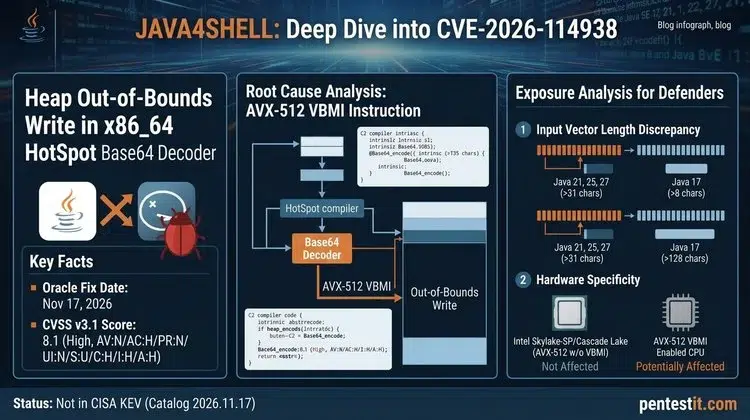
Java4Shell (CVE-2026-114938) is a heap out-of-bounds write in the x86_64 HotSpot Base64 decoder that uses AVX-512 VBMI. Oracle fixed it on November 17, 2026 and scored it CVSS 3.1 8.1 (AV:N/AC:H/PR:N/UI:N/S:U/C:H/I:H/A:H), component Compiler. It affects Oracle Java SE 17, 21, 25 and 27, the 8u511 performance build, and GraalVM. Standard Java 8 and Java 11 are not affected. It Read more about Java4Shell (CVE-2026-114938): What Is Confirmed, Who Is Exposed, and How
Popular this week
- Cyber Threat IntelligenceAI Pentesting Frameworks: Abuse, Lineage, Fingerprints
- Cyber Threat IntelligencePHP2Shell (CVE-2026-109618, CVE-2026-109619): Actively Exploited, Now in CISA KEV
- Cyber Threat IntelligenceMicrosoft Patch Tuesday November 2026: Patch the Outlook zero-day first!
- Detection Engineeringsshole (CVE-2026-123158): OpenSSH musl Password Bypass Root Cause, Detection and Mitigation
- Cyber Threat IntelligenceAnalysis: CVE-2026-88771 and CVE-2026-88772
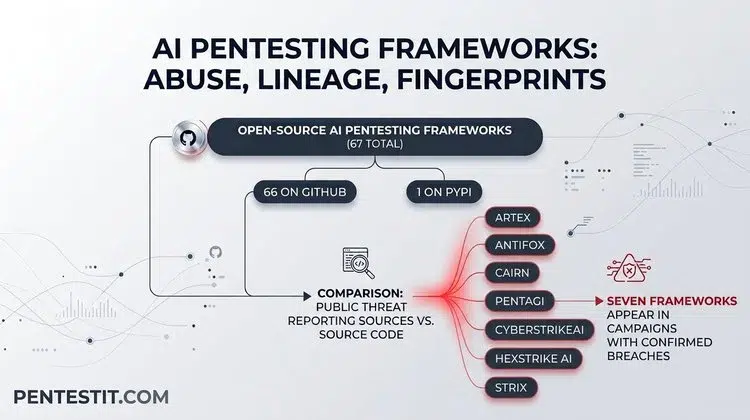
AI Pentesting Frameworks: Abuse, Lineage, Fingerprints
67 Open-Source AI Pentesting Frameworks: Which Ones Attackers Use, Whose Code They Carry, and Which Fingerprints Hold Up!
Frameworks like ARTEX interested me early on and lately have been hogging my news feed for obvious reasons. I set out to find additional such open source frameworks. This is the result - I found 67 open-source AI pentesting frameworks, 66 on GitHub and one on PyPI. I then compared them against public threat reporting sources and against their own source code. Seven frameworks Read more about AI Pentesting Frameworks: Abuse, Lineage, Fingerprints
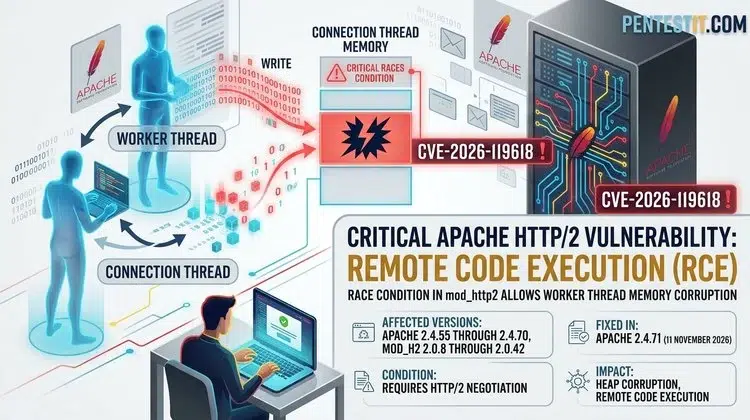
CVE-2026-119618: Apache mod_http2 Race Condition Root Cause, Detection and Mitigation
Story of a one line fix that moves a header write from a table two threads share to a table one request owns.
A critical race condition vulnerability exists within mod_http2, the HTTP/2 protocol module for the Apache HTTP Server. The flaw stems from a concurrency defect where a worker thread executes memory write operations into regions owned by the connection thread, resulting in severe heap corruption and potential remote code execution (RCE). Apache HTTP Server versions 2.4.55 Read more about CVE-2026-119618: Apache mod_http2 Race Condition Root Cause, Detection and Mitigation
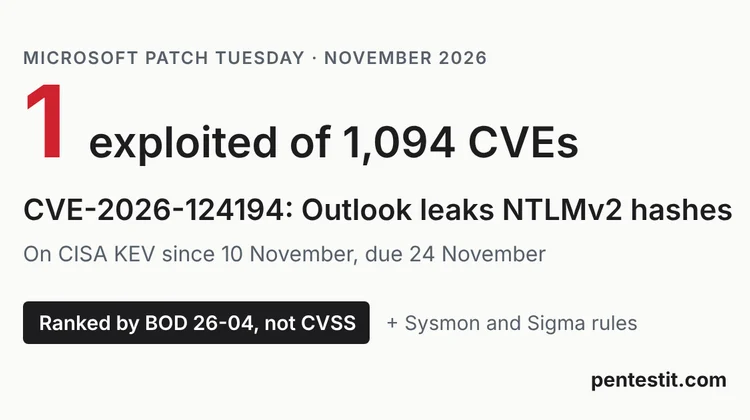
Microsoft Patch Tuesday November 2026: Patch the Outlook zero-day first!
One exploited CVE out of 1,094: CVE-2026-124194, an Outlook NTLMv2 leak, on KEV and due 24 November. Patch prioritized by BOD 26-04.
Microsoft's November 2026 Patch Tuesday release fixes 1,094 CVEs. Out of those, one is already being exploited: CVE-2026-124194, an Outlook spoofing bug that hands an attacker the user's NTLMv2 hash when a crafted message file is opened. Saving grace that no other vulnerabilities are publicly disclosed. CISA has already added it to KEV, due 24 November, with no forensic triage. Read more about Microsoft Patch Tuesday November 2026: Patch the Outlook zero-day first!
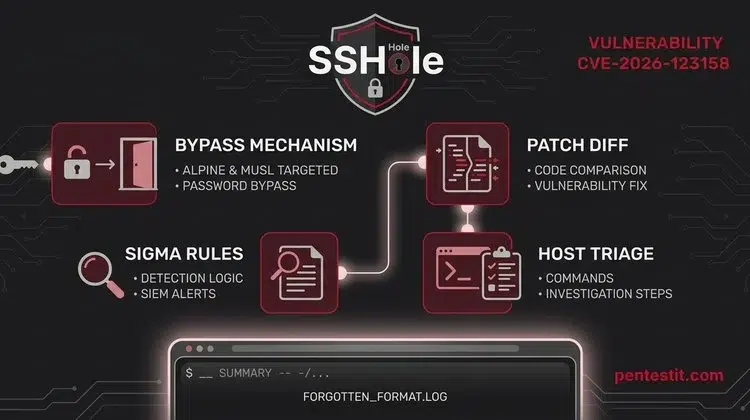
sshole (CVE-2026-123158): OpenSSH musl Password Bypass Root Cause, Detection and Mitigation
On Alpine CVE-2026-123158 allows log into an account that has no password when three conditions are met!
CVE-2026-123158 ("sshole") lets an unauthenticated attacker log into any OpenSSH account whose /etc/shadow password field is exactly * by sending a 257 to 1024 byte password. It only works when sshd is linked against musl libc, runs without PAM, has PasswordAuthentication yes, and at least one other local account holds a $5$ or $6$ hash. Fix: OpenSSH 10.6p2 or your distribution Read more about sshole (CVE-2026-123158): OpenSSH musl Password Bypass Root Cause, Detection and

CriticalDetection Engineering
CVE-2026-98432: Linux Kernel IPv4 TCP Use-After-Free Root Cause, Detection and Mitigation
CVE-2026-98432 root cause, fixed builds per distribution, detection-engineering based workaround and validated detections.
CVE-2026-98432 is a remote, unauthenticated use-after-free vulnerability in the Linux kernel IPv4 TCP handshake mechanism, present in every kernel from 4.4 up to the fixed stable releases. A remote, unauthenticated attacker transmits a TCP SYN packet that carries IPv4 Record Route or Timestamp options to any listening IPv4 TCP port, then sends a retransmitted SYN flag against Read more about CVE-2026-98432: Linux Kernel IPv4 TCP Use-After-Free Root Cause, Detection and
CriticalDetection Engineering
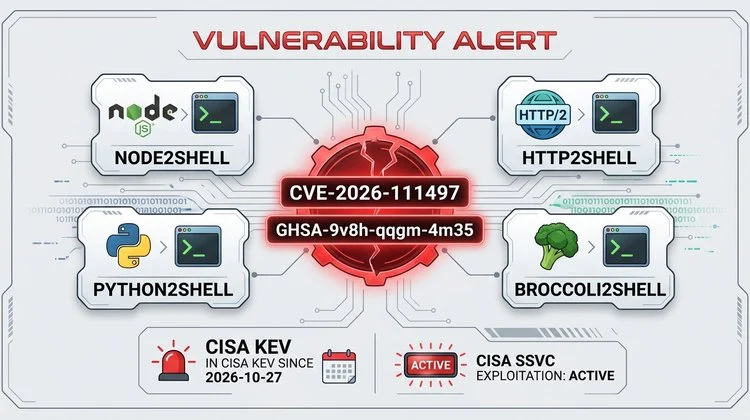
Node2Shell/HTTP2Shell (CVE-2026-111497): Detection and Mitigation for Node.js
Detect & mitigate CVE-2026-111497. Upgrade Node.js to 22.23.4, 24.22.1 or 26.12.1 or later versions.
It's now evident that everyone knows - Node2Shell and HTTP2Shell are the same bug: CVE-2026-111497. It is an out-of-bounds write condition in the Brotli decoder that Node.js bundles. CISA added it to the KEV catalog on October 27, 2026, with a federal due date of November 10, 2026. Upgrade Node.js to 22.23.4, 24.22.1 or 26.12.1, rebuild your images, and restart every Node Read more about Node2Shell/HTTP2Shell (CVE-2026-111497): Detection and Mitigation for Node.js
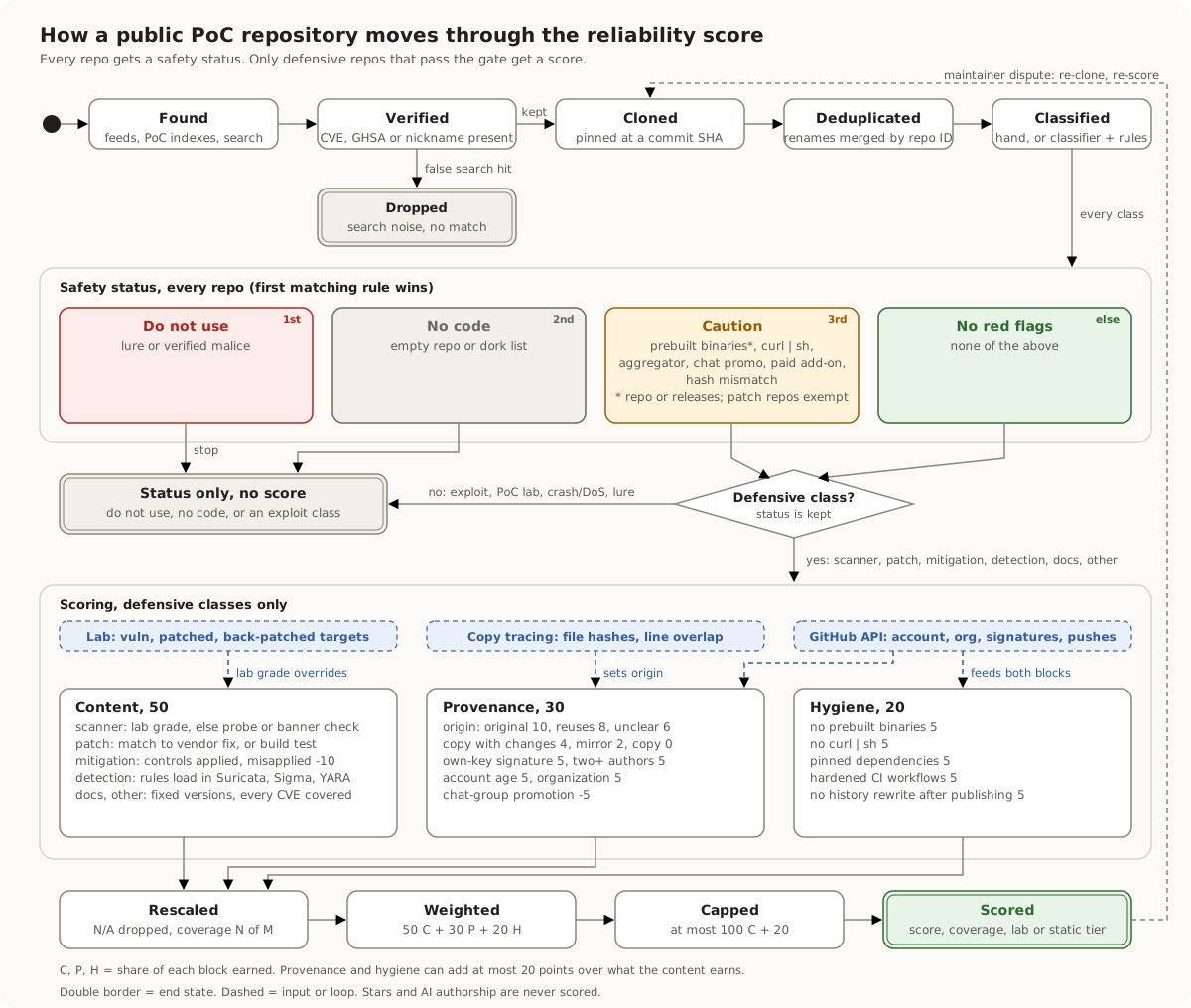
Quantitative Scoring of GitHub Hosted PoCs: A php2shell Case Study
I graded 1,414 php2shell repositories on GitHub. Only 5 of the 38 scanners I ran differentiate a patched server from a vulnerable one.
php2shell is now a thing from the last week as PHP fixed CVE-2026-109618 and CVE-2026-109619 on 21 October. In the days leading upto the weekend, multiple proof-of-concept code were uploaded to GitHub and elsewhere. I'm publishing my algorithm to analyze repositories that are safe to run and which ones do their job. This analysis is based on the 1,414 repositories, uploaded and Read more about Quantitative Scoring of GitHub Hosted PoCs: A php2shell Case Study
CriticalCyber Threat Intelligence
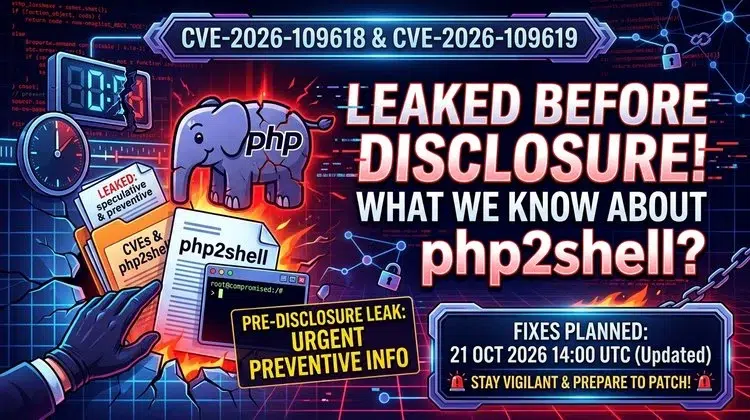
PHP2Shell (CVE-2026-109618, CVE-2026-109619): Actively Exploited, Now in CISA KEV
This post details typical response options for high priority PHP vulnerabilities CVE-2026-109618 and CVE-2026-109619.
PHP announced fixes for two critical bugs on Wednesday, 21 October 2026 at 14:00 UTC. Why are these important? It's because the vulnerabilities were reportedly leaked before their planned disclosure. I'll update this post as more information is made available and PHP and the distros publish. Until then, treat this post as a speculative and preventive information. All Read more about PHP2Shell (CVE-2026-109618, CVE-2026-109619): Actively Exploited, Now in CISA KEV

Auditing Electron Fuses with REA
In this post, I "ab"use REA - (Reverse Engineer Anything) MCP to read Electron fuses out of the app binaries without launching them.
Over the weekend, a reverse-engineering MCP - REA, short for Reverse Engineer Anything was all over my X/Twitter timeline. I wanted to quickly try all that was claimed So, I audited apps installed on my test machine - chat, notes, code editors, password managers. Most of them ended up being Electron applications and Electron ships with build-time switches called fuses. These Read more about Auditing Electron Fuses with REA
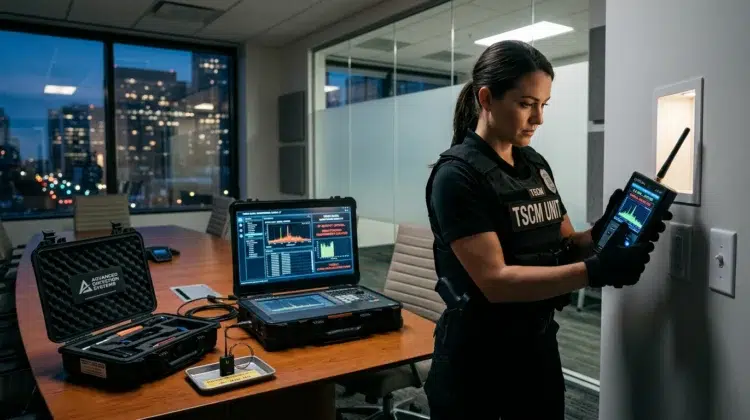
The OpenAI Sophisticated Recording Device: Detection and Response – Part II
This is a continuation to my older post where I discuss about network and endpoint strategies to detect and respond to hardware implants.
In my last post about the OpenAI sophisticated recording device, I stopped at general detection and response guidelines for covert devices that do not transmit. This post deals with the logical next step when such espionage devices have exfiltration capabilities and are now on your Microsoft Windows/Linux/Apple Mac server endpoints. There can be a variant where some one "pulls" Read more about The OpenAI Sophisticated Recording Device: Detection and Response – Part
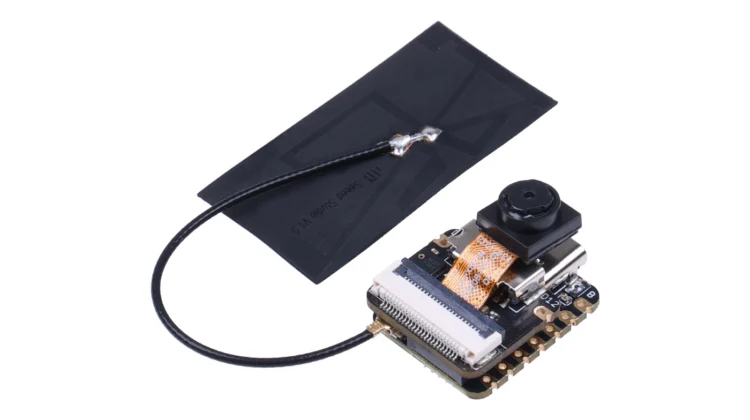
The OpenAI Sophisticated Recording Device: Detection and Response – Part I
This is my post to help you in detection and response of the OpenAI recording device & similar devices when connected to an endpoint.
I came across the now viral OpenAI Newsroom post on X where an OpenAI engineer accused of planting a sophisticated recording device in an executive conference room. The device was a Seeed Studio XIAO ESP32-S3 Sense that was plugged into a USB port on the back of a TV. I missed the "back of a TV" part earlier and wrote this post with a endpoint - Microsoft Windows/Linux/Apple Read more about The OpenAI Sophisticated Recording Device: Detection and Response – Part