I came across the now viral OpenAI Newsroom post on X where an OpenAI engineer accused of planting a sophisticated recording device in an executive conference room. The device was a Seeed Studio XIAO ESP32-S3 Sense that was plugged into a USB port on the back of a TV. I missed the “back of a TV” part earlier and wrote this post with a endpoint – Microsoft Windows/Linux/Apple Mac device in mind. However, as I referred multiple sources, I came across the fact that a non-endpoint device was used. Hence, I wanted to list down all present options to assist in detection and response of such implants.
What is the OpenAI Sophisticated Recording Device?
The XIAO ESP32-S3 Sense is a thumb-sized development board – 21 by 17.5 millimeters in size. These components make up the complete device:
- Dual-core Xtensa LX7 at up to 240 MHz, 8MB flash, 8MB PSRAM.
- 2.4 GHz Wi-Fi and Bluetooth LE 5.0.
- A clip-on expansion board carrying a camera, a digital microphone, and a microSD slot for FAT cards up to 32GB. Units ship with a 2MP OV2640/5MP OV5640.
- Power over USB-C at 5V, or a LiPo cell through the battery pads. No battery on the board itself.
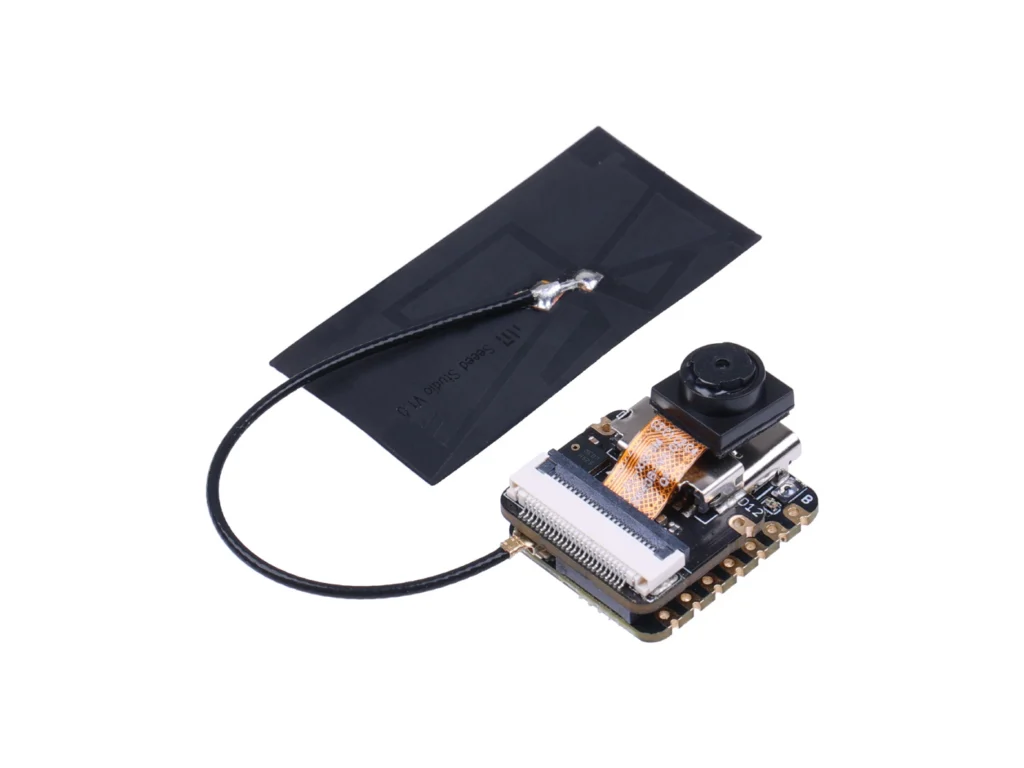
Based on the official complaint the firmware looked compiled fresh, the microSD contents appeared encrypted, and the device seemed changed to stop data passing to the TV it was plugged into.
Why security tools would have missed detecting the sophisticated OpenAI recording device?
No endpoint was involved. EDR, Sysmon, ETW, none of them run on a TV and so naturally these technologies did not see a new process/implant being added. The physical implant records to a microSD and did not have an exfiltration module. So, it no network devices would have caught it either.
Palo Alto Networks’ 2025 device security report, based on 27 million devices across 1,803 customer networks, found that 32.5% of devices on corporate networks operate outside IT control, with smart TVs named as an example, and that nearly 39% of IT devices registered in Active Directory lack an active EDR or XDR agent. In Microsoft’s 2021 study with the Ponemon Institute, only 29% of 615 practitioners said their organization had a complete inventory of its IoT and OT devices, and 61% had low or average confidence they could tell whether an IoT device was compromised. I couldn’t find any survey that measures monitoring of meeting-room displays or AV gear specifically. If you know of one, tell me.
How to detect the XIAO ESP32-S3 Sense implant?
These are my suggestions to detect such recording implants:
- Physical sweeps: This is how OpenAI actually found it. Organizations should treat USB ports on displays and AV gear in sensitive locations such as a meeting/conference room in their daily sweeps. Nonlinear junction detectors can find electronic devices with their radios off. A thermal camera will be able to find a board that’s been running for days based on it’s heat dissipation.
- Port controls on AV gear: You can’t push a GPO setting to a TV. Some models allow turning off a display’s USB power. But these covert devices can run just as well on a battery, a wall USB outlet, a dock, or a power strip. Hence, cover or block USB ports you don’t use on displays, codecs and docks, and put tamper-evident seals on the ones you have. Inventory every powered port in sensitive rooms, including wall outlets with USB, so the next sweep has accounted for it in a checklist.
- Video recording: Install cameras on the entrance of sensitive rooms, and treat repeat visits to a room someone doesn’t meet in as a signal for a physical sweep.
- Wireless monitoring: Not utilized in this case, but a ESP32 device can have WiFi capabilities. Hence, it has to scan for the network sends probe requests before it ever associates. A Wireless IDS or a passive sensor agent that logs probing MACs and checks them against Espressif’s OUIs can detect a device.
In this post, we have seen what the device is, why your security solutions would have missed it and what would have caught it. These work well when the implant does not remotely exfiltrate. But, what if a new variant does? I have detection hypotheses ready for such scenarios and will list them in my next post. one that transmits, and one that gets plugged into a computer. For those, I’ll give you Zeek, Sigma and Sysmon logic you can run out of the box. These are true for a physical red team operation too.
Leave a Reply
You must be logged in to post a comment.